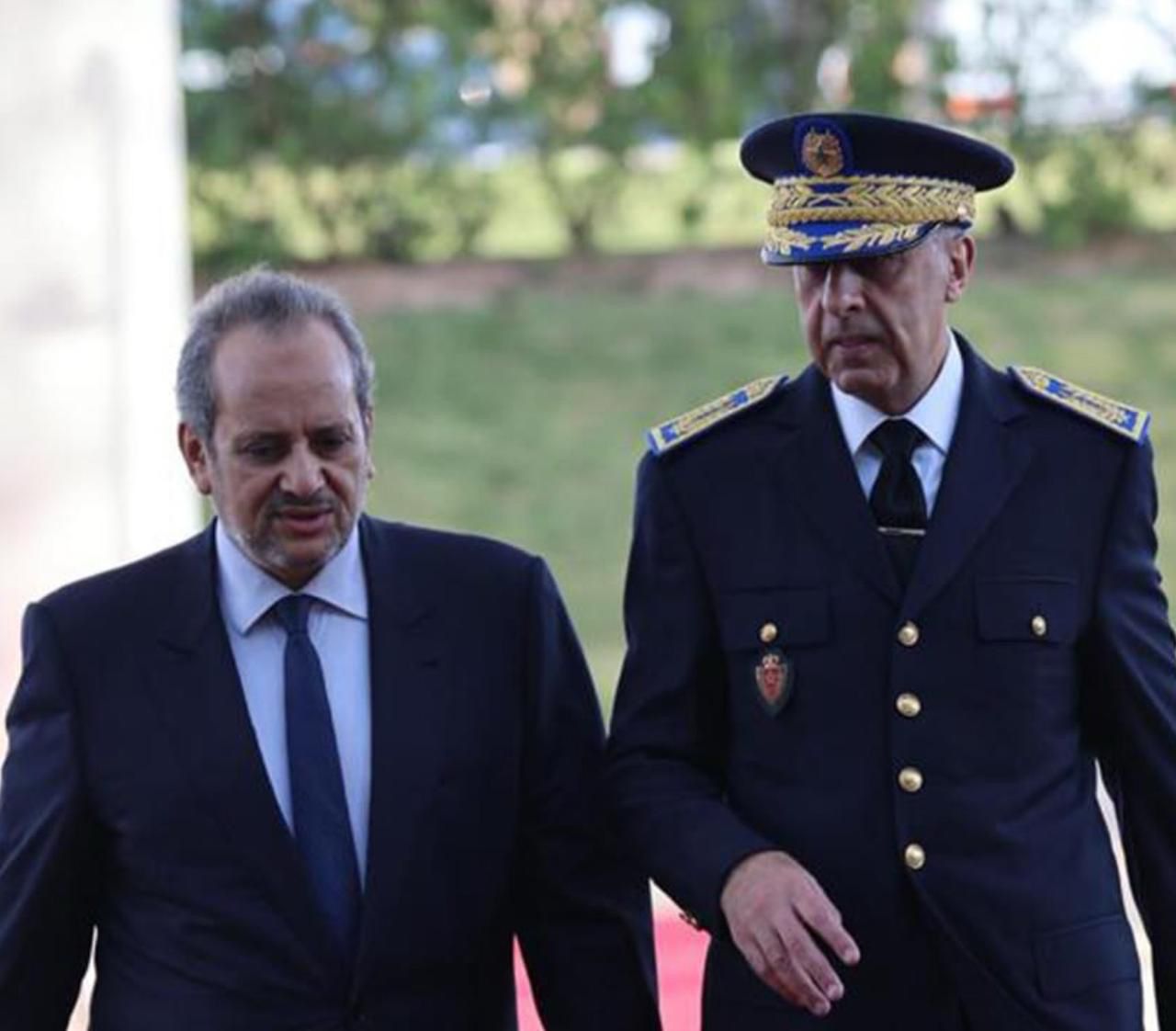
The Security Structure (Part Four): Integration of Morocco’s Internal and External Intelligence: A Rock Against Which All Foreign Plots Break
By: Dr. Tarek Tlaty, President of the Moroccan Center for Strategic Studies and Research
Morocco’s national security is considered an integrated system distributed across multiple institutions, yet the cornerstone remains the intelligence services: the General Directorate for Territorial Surveillance (DGST), responsible for internal security, and the General Directorate for Studies and Documentation (DGED), tasked with external intelligence. Although their areas of operation differ, the harmony and integration between these two services form the foundation of Morocco’s strength in facing multiple and complex threats.
Distinct Roles and Complementary Responsibilities
The DGST acts as the vigilant guardian of the domestic front, monitoring potential terrorist threats, identifying criminal networks, and countering anything that might compromise the country’s internal security and stability. Meanwhile, the DGED operates on the external front, gathering intelligence, analyzing regional and international balances, and providing the state with the necessary information for strategic and diplomatic decision-making, enabling optimal geostrategic positioning.
This intelligent distribution of tasks prevents unnecessary overlap and allows the construction of an interconnected security chain that starts internally and does not end at geographical borders, but extends to where risks arise in Morocco’s regional and international environment.
Bridges of Cooperation Between the Two Services
Despite the differences in their operational scopes, both services operate under a logic of continuous coordination and information exchange. Intelligence collected externally about extremist groups’ activities in the Sahel region, for example, becomes essential input for proactive internal security measures. Conversely, movements or dormant cells detected internally can serve as initial signals for external investigations to track their extensions.
This informational and operational integration enables Morocco to thwart terrorist plans before they are executed, granting it a significant advantage in confronting organized transnational criminal networks.
National Constants: The Unifying Link Between the Services
Despite their differentiated roles and mandates, the common denominator uniting the two services is a deep adherence to the Kingdom’s constants: God – the Homeland – the King. This principle is not merely a slogan but a strategic compass guiding all operations, decisions, and intelligence programs.
Personnel in both DGST and DGED are wholly devoted to defending the sovereignty of the Kingdom and its highest interests, without regard for personal gains or narrow calculations. They are soldiers in the shadows, placing national allegiance above all else, and turning the protection of the country and citizens’ dignity into a daily value and practical mission evident in the smallest details.
Unified Leadership and a Guarantee of Stability
Beyond this bilateral integration between domestic and external intelligence, Morocco’s security structure as a whole appears as a coherent system, operating under the directives of His Majesty King Mohammed VI. It is supervised by a man loyal to the King, His Majesty’s security and political advisor, who acts as a “strategic orchestrator,” ensuring harmony among the various security services and granting them institutional stability, preventing conflicts or jurisdictional disputes.
This direct royal supervision, via a trusted advisor, ensures that Morocco’s security services function as a unified entity operating under a single vision, reinforcing both domestic and international confidence in Morocco’s capacity to face growing security and geopolitical challenges.
Plots, Intrigues, and Treason… Break Against the Rock of National Doctrine
Certain foreign powers attempt, through despicable methods, to sow discord between Morocco’s security services, portraying them as competing entities in order to exploit openings to destabilize the country. However, these maneuvers, regardless of their media or propaganda tools, are destined to fail.
The strong patriotic spirit uniting the leaders of both services, coupled with the loyalty of the patriots working among them, makes these plots little more than bubbles that burst against the rock of fidelity to the homeland and the Throne. Experience has shown that all hostile campaigns targeting Morocco’s security services quickly fail, as they do not comprehend the depth of Moroccan national unity, built on shared constants and the legitimacy of institutions.
Alongside foreign plots, treason likewise has no place in Morocco, even if it seeks support from external enemies or attempts to hide behind dubious agendas. The state, through its robust security institutions, can detect treason at its source, neutralize its roots, and deter anyone seeking to compromise national security.
In this sense, the integration between DGST and DGED remains not only a security guarantee but also a political and moral message: Morocco is a fortress, and any plot or act of treason, whether internal or external, will break upon the rock of the national constants: God – the Homeland – the King.
مشاركة المحتوى:


إرسال التعليق