Response to Mr. Attaf.. The Moroccan Sahara Issue: A Legal Compass**
By MarsoolPress (T.T)
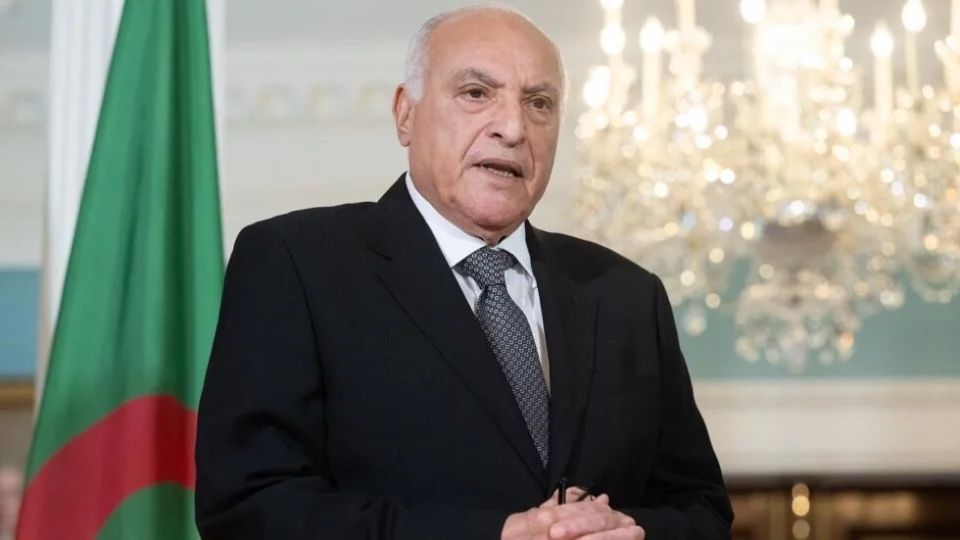
In light of the recent statements made by Algeria’s Minister of Foreign Affairs, Mr. Attaf, regarding his country’s purported readiness to assume a role of mediation in the artificially created regional dispute over the Moroccan Sahara, it is necessary—out of respect for accuracy and institutional memory—to reaffirm, with full clarity and responsibility, that the sole legitimate and internationally recognized framework for addressing this dispute remains the United Nations. This is in accordance with the relevant Security Council resolutions, which clearly define the parameters and trajectory of the settlement process under the auspices of the Secretary-General and his Personal Envoy.
The Kingdom of Morocco, which has been seriously and constructively engaged in the UN process for decades, is firmly convinced that any attempt to alter the legal or political framework governing this issue is unproductive and does not contribute to the search for a viable solution. The international community, through its successive resolutions, has consistently reiterated the need to confine the management of this dispute to the United Nations, as the only institution capable of ensuring impartiality and upholding international legitimacy.
In this context, we remind Minister Attaf that it is neither objectively nor logically possible for Algeria to be considered a mediator in this matter. It is widely acknowledged—without ambiguity—that Algeria is a principal party to the dispute, as demonstrated by its political stance, its political, financial, and logistical support to the Polisario Front, as well as its hosting of its leadership on Algerian soil for over five decades. This role has been evident across regional, continental, and international forums, where Algeria has consistently defended a separatist narrative that contradicts aspirations for regional stability.
Numerous UN documents— including Security Council session records and official correspondence—highlight Algeria’s pivotal role in this issue, whether through its direct political ties with the Polisario Front or through its constant presence in all previous negotiation phases.
Furthermore, the Security Council has, on multiple occasions, explicitly called upon Algeria to engage constructively in the process, alongside Morocco, Mauritania, and the Polisario Front, which clearly demonstrates that Algeria is not, and has never been, a neutral party.
The Kingdom, while reaffirming its unwavering commitment to a realistic and constructive political solution based on the Autonomy Initiative for the Southern Provinces under Moroccan sovereignty, remains firmly attached to the UN framework and to autonomy as the sole serious and credible proposal endorsed by the United Nations, recognized by major global powers, and supported by the wider international community.
Morocco reiterates its readiness to continue cooperating with the United Nations and with all parties acting in good faith to reach a final settlement that guarantees security, stability, and development in the region.
Accordingly, any initiative put forward outside the UN framework—and any attempt to present a party to the dispute as a mediator—is inconsistent with political and diplomatic realities, conflicts with the logic of the UN-led process, and does not contribute to narrowing differences or supporting ongoing international efforts.
The Kingdom of Morocco will remain steadfast in its responsible approach, committed to the principles of international cooperation, and fully engaged in the UN process as the sole pathway toward a just and lasting solution to this artificial regional dispute.
مشاركة المحتوى:


إرسال التعليق