
Benkirane Against the Logic of the State: How Has Populism Become a Threat to Morocco’s Strategic Interests?
By El Hajj El Maati
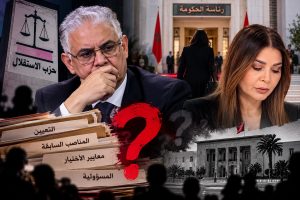
At a time when Morocco is engaged in complex diplomatic and economic battles to strengthen its position among nations and defend its strategic interests, Abdelilah Benkirane continues to make statements and adopt positions that serve nothing but a logic of confrontation and futile conflict with major world powers, foremost among them the United States of America. Instead of understanding the geopolitical transformations that require states to pursue realism and wisdom in managing their foreign relations, he persists in promoting a tense populist discourse drawn from the rhetoric of the international Muslim Brotherhood movement—classified as a terrorist organization by several Arab countries. His approach reduces international politics to emotional slogans and impulsive positions that disregard both the calculations of the state and the interests of the nation.
The most dangerous aspect of this approach is that it goes beyond merely stirring domestic controversy. It sends negative signals that may be interpreted as questioning the strategic choices through which Morocco has secured significant diplomatic and economic gains over the decades. While state institutions are working to build bridges of cooperation and partnership with influential global actors, Benkirane opts for a language of escalation and political antagonism, seemingly indifferent to the damage such rhetoric may inflict on Morocco’s image and higher national interests. Nations are not governed by emotional outbursts and fiery speeches, but by responsibility and strategic vision—considerations that Benkirane appears willing to set aside whenever narrow political gains or ideological scores are at stake.
In yet another ill-considered public appearance—one that generated considerable surprise and media attention—Abdelilah Benkirane spoke about the United States in a tone that appeared dismissive of both the country and its historical trajectory. He asked rhetorically: “What is America, and who is America? It is merely a young nation that is no more than 250 years old.” Yet Benkirane, due to what many perceive as limitations in his academic and intellectual formation, fails to understand that the value of nations is not measured solely by their age, but also by their ability to build institutions, generate knowledge, achieve development, and exert influence on the international stage.
Likewise, Benkirane’s response to questions regarding the ideological and intellectual intersections between the Justice and Development Party (PJD) and the Muslim Brotherhood did not appear convincing to many observers. Rather than providing calm and responsible political explanations, he chose a confrontational tone toward his interlocutor, creating the impression that the question itself was an irritation rather than a legitimate topic worthy of discussion.
The matter becomes particularly sensitive when such remarks come from a figure who once served as Head of Government. Anyone who has occupied such a position is expected to weigh their words carefully, especially when speaking about a country with which Morocco maintains strong strategic, political, and economic ties. Political debate is legitimate, and differences of opinion are natural, but public discourse must still preserve a degree of balance and sobriety consistent with the speaker’s stature and former responsibilities.
In that moment, Benkirane appeared less like a composed statesman and more like an agitated politician disconnected from sound judgment. Between impulsiveness and wisdom lies the distance that separates a discourse seeking to persuade from one that merely seeks to generate noise.
مشاركة المحتوى:





إرسال التعليق