
After the Crisis in Occupied Ceuta: Is It Time for a Government of National Unity
By Dr. Tarik Atlaty
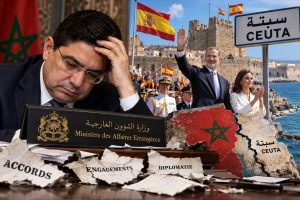
The events in Occupied Ceuta can no longer be regarded as merely a migration crisis. They have evolved into a defining political moment, exposing the extent to which the governmental model established under Morocco’s 2011 Constitution has exhausted its ability to produce effective solutions. When thousands of young Moroccans choose to risk their future in pursuit of an opportunity beyond their homeland, this reflects not only a profound social crisis but also a clear failure of public policies to contain despair and restore confidence in state institutions.
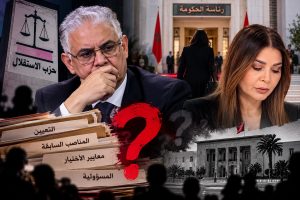
This crisis has also revealed the striking absence of several government sectors, foremost among them the Ministry of Youth and Culture, whose leadership emerged from this critical moment politically directionless and with virtually nothing to show for its stewardship. Equally absent was the Ministry of Solidarity, which appeared unable to reach those most in need of the solidarity it is entrusted to provide. From employment and youth affairs to social solidarity, the overall record has been deeply disappointing. At a time when the country needed proactive leadership, a visible presence on the ground, and strategic foresight, it received little more than reactive responses.
What has happened cannot be attributed to the failure of a single ministry. Rather, it is the cumulative consequence of years of partisan governance since the adoption of the 2011 Constitution—a model that has devoted greater attention to managing the political equilibrium between the governing majority and the opposition than to safeguarding the cohesion of society itself. Today, the fundamental question is no longer who governs, but rather how Morocco’s strategic sectors are being governed at this particularly sensitive stage.
Because the Kingdom is neither facing a constitutional breakdown nor an exceptional institutional crisis, calls for a “Government of National Salvation” find neither constitutional nor political justification. By contrast, the formation of a Government of National Unity has become not merely a political option but a national necessity.
Morocco today needs a government with a strong technocratic profile, bringing together highly qualified national experts in economic policy, employment, education, investment, and territorial administration. Such a government must move beyond the logic of partisan power-sharing, which has consumed valuable political time without delivering answers commensurate with the expectations of the Moroccan people. It must also break with political figures who, over the years, have been imposed upon Moroccan society through unquestioned faith in partisan choices despite their inability to meet the country’s aspirations.
Nations are not governed through partisan loyalties when crises accumulate. They are governed through competence, courage, strategic vision, and sound public management. The period following Occupied Ceuta cannot resemble the one that preceded it, because the message delivered by thousands of young people and minors—boys and girls alike—was unmistakable and deeply painful: slogans are no longer sufficient, and promises no longer inspire confidence.
The establishment of a Government of National Unity should not be interpreted as an admission of state failure. On the contrary, it would represent a demonstration of the State’s political maturity. It would constitute a courageous acknowledgement that the current phase demands a new executive leadership capable of restoring public trust, opening a renewed political and social horizon, and preventing despair from becoming a permanent reality whose consequences could ultimately take the entire nation by surprise.
مشاركة المحتوى:




إرسال التعليق